
Airway-focused orthodontics
How jaw development affects breathing, what signs to look for in children, and how orthodontic treatment can support the airway. CDZ Ortho, Johns Creek.
This page is general information about orthodontic treatment. It is not a diagnosis and it is not a substitute for an examination. Only an in-person exam can tell you what applies to you.
What this means
Dr. Cen assesses breathing as part of the orthodontic examination, alongside the teeth and the bite.
The upper jaw forms the floor of the nasal cavity. Its width and shape affect how much space there is for air to pass through the nose. A narrow upper jaw can mean a narrower nasal airway.
The position of the tongue matters as well. At rest, the tongue should sit against the roof of the mouth, where it supports the upper arch from the inside as the child grows. There is an observed association between habitual mouth breathing, a low resting tongue position, and a narrow, high palate. How much one causes the other is still debated.
Signs worth raising
In children: habitual mouth breathing, snoring, restless sleep, waking unrefreshed, chronic congestion, a narrow upper arch, a crossbite, or an open bite.
In adults: snoring, daytime tiredness that sleep does not fix, waking with a dry mouth or headache, or a diagnosis of obstructive sleep apnea.
None of these confirms an airway problem on its own. They are reasons to have it looked at.
What orthodontic treatment can do
Palatal expansion. Widening a narrow upper jaw creates room in the arch and can increase the volume of the nasal airway. In a growing child this is done without surgery, which is one of the reasons early evaluation matters.
Correcting the bite. A retruded lower jaw sits the tongue further back. Bringing the lower jaw forward in a growing patient can open the space behind the tongue.
Creating room for the tongue. A wider arch gives the tongue somewhere to rest against the palate.
From Dr. Cen
How palatal expansion works
What it cannot do
Orthodontics addresses the skeletal and dental part of the airway. It does not treat enlarged tonsils or adenoids, nasal obstruction from allergies or a deviated septum, or obstructive sleep apnea on its own.
Where those are involved, treatment is coordinated with an ENT specialist, a sleep physician, or an allergist. Sleep apnea is diagnosed by a sleep study, not by an orthodontic exam.
Dr. Cen will tell you when the right next step is a referral rather than an appliance.
How it is assessed
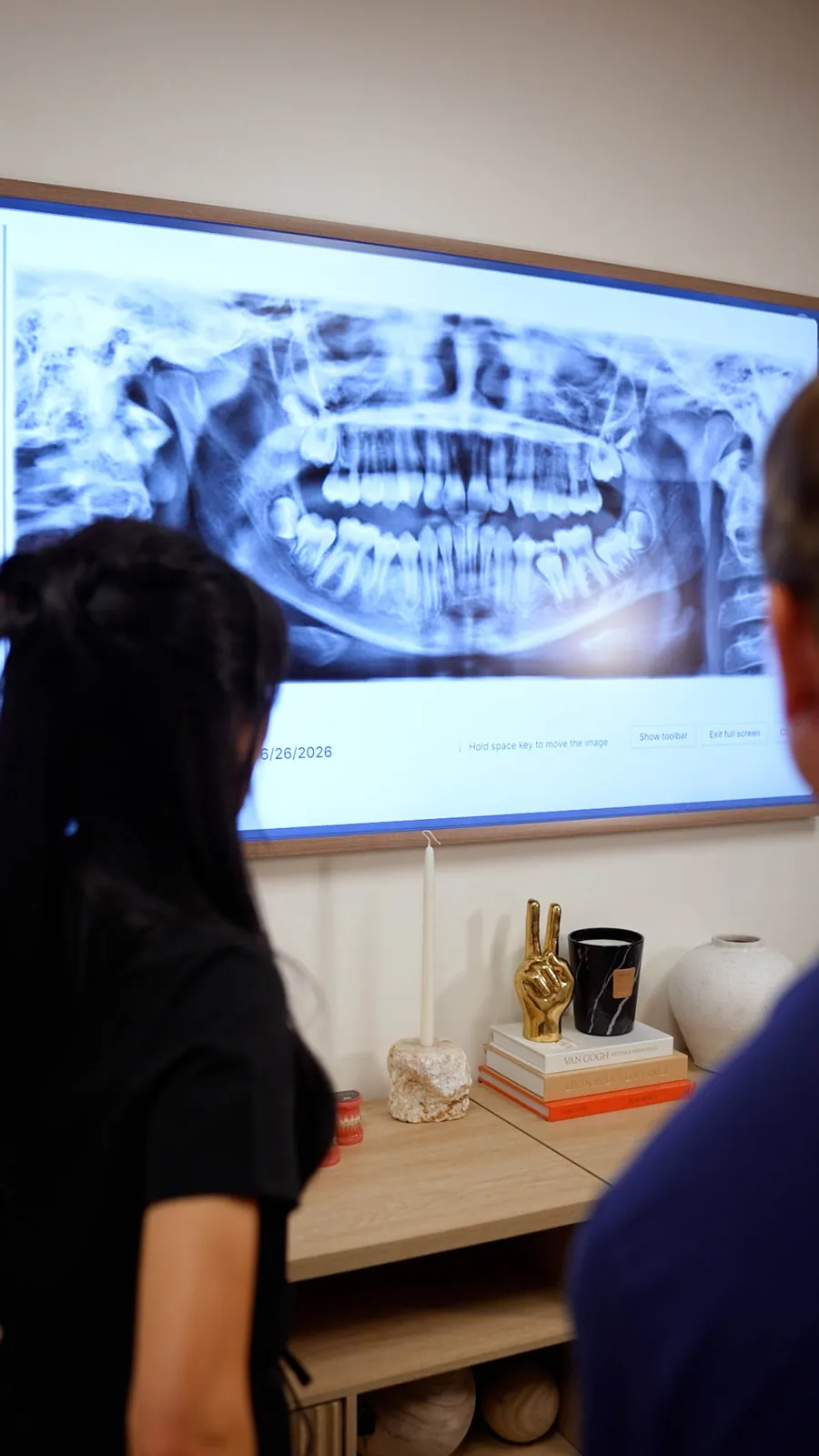
The examination covers arch width, palate shape, tongue posture, breathing pattern, tonsil size on visual inspection, and the bite. Imaging is used where it adds information.
If the findings point to something outside orthodontics, you get a referral and an explanation of why.
Booking
Airway concerns can be raised at a standard free consult. You do not need a separate appointment type.